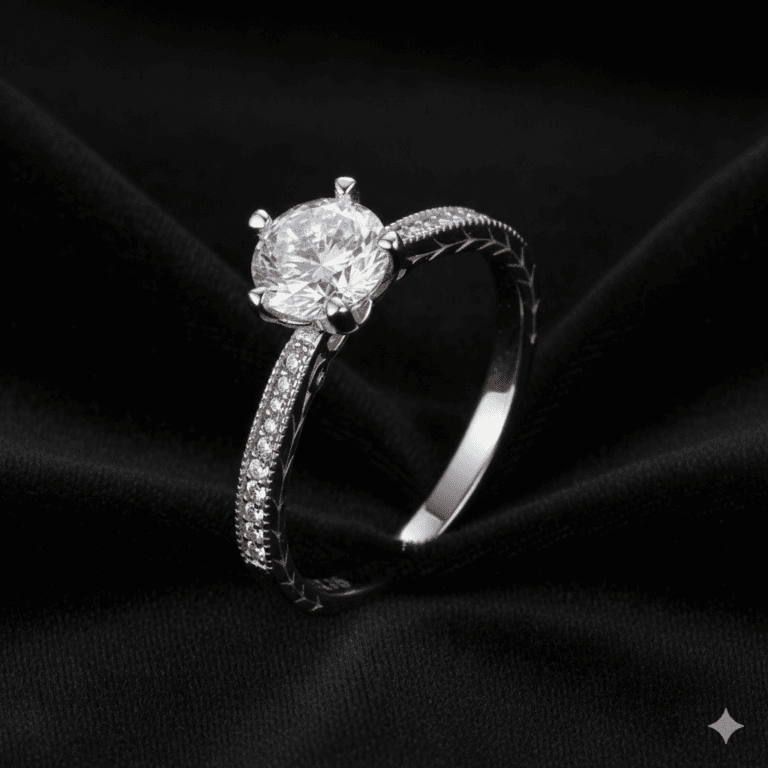

The Best Jewelry Storage for Lab-Grown Diamonds
Store each lab-grown diamond ring or pendant separately, in a soft-lined compartment or pouch, somewhere cool and dry. The diamond itself is one of the hardest materials there is and won’t scratch from ordinary storage — but it will happily scratch everything else sharing the box, and the 925 sterling silver around it will tarnish if it sits in humid air. This guide covers every storage method worth using, how to keep necklace chains from tangling, and the small routine that keeps a ring or pendant looking new between wears.
Why Storage Matters for Lab-Grown Diamond Jewelry
Lab-grown and natural diamonds are chemically identical carbon and share the same Mohs hardness of 10, the top of the scale. That makes a lab-grown diamond extremely resistant to scratching in everyday wear, but it also means it can scratch almost anything else it touches — including another diamond, a pearl, or the polished silver band of a different piece dropped in the same drawer.
The second issue has nothing to do with the diamond. Every GemsGlitz ring and pendant is 925 sterling silver with a rhodium finish (see our materials page for the full breakdown), and sterling silver reacts with sulfur compounds naturally present in air and accelerated by humidity. Left loose on a dresser, a piece will tarnish over time regardless of how carefully the stone is protected. Good storage has to solve both problems at once: keep hard stones from touching soft metal, and keep metal away from air and moisture.
Storage Options Compared
None of these is the single “right” answer — most jewelry collections end up using two or three of them together, depending on how many pieces you own and how often you travel.
One option is already sitting in your closet: every GemsGlitz ring or pendant arrives in its own individual gift box. That box is a soft-lined, single-piece compartment from day one, and simply continuing to use it — rather than moving the piece into a shared drawer or dish — solves most of the scratching problem without buying anything extra. It’s worth keeping even once you’ve settled on a bigger storage system for the rest of your collection.
- Lined boxes with compartments. A box with individual, soft-lined slots is the best all-round option for a growing collection: each ring or pendant gets its own space, so nothing rubs against anything else. Look for a soft fabric lining rather than bare wood or plastic.
- Individual soft pouches. Cheap, compact, and effective — a drawstring pouch per piece stops contact scratching even inside a shared drawer or a larger box that doesn’t have dedicated compartments. This is the easiest starting point if you only own a few pieces.
- Anti-tarnish strips or bags. These absorb the sulfur compounds and moisture that cause silver to tarnish. Dropping a strip into a jewelry box, or using anti-tarnish fabric pouches instead of plain cotton ones, slows tarnishing without any extra effort on your part.
- Ring rolls. A padded roll with individual slots keeps rings upright and separated, which matters more than it sounds — two rings tossed loosely together are the single easiest way to put a scratch on a band.
- Hanging storage for chains. A hook-based organizer or hanging pouch with loops lets each pendant chain hang fully extended, which is the most reliable way to prevent the tangling that happens when chains are coiled together in a drawer.
How to Store Necklaces Without Tangling
A tangled chain is usually a storage problem, not a design flaw. Three habits solve most of it.
Fasten the Clasp Before You Put It Away
Close the clasp even when the pendant isn’t being worn. A closed loop is far less likely to catch on another chain than an open-ended one, and it also takes pressure off the clasp mechanism itself, which extends its working life.
Hang It or Lay It Flat
Chains tangle when they’re coiled loosely into a bowl or a corner of a drawer. Hanging a pendant on a hook, or laying it flat in its own compartment with the chain stretched out rather than bunched, keeps it ready to wear without any untangling first. An adjustable chain, like the one on our Grace pendant, is easiest to store if you leave it set at the length you actually wear, rather than re-adjusting it before every storage.
Keep Chains Separated
Never store two necklaces in the same compartment or pouch. Even two fine chains left together for a few days can knot themselves surprisingly tightly. If you own more than one pendant, individual pouches or a hanging organizer with separate hooks are worth the small extra cost.
Storing Rings Safely
Rings face a slightly different risk than pendants: they’re more likely to be stored several at a time, and a diamond-set ring left touching another ring can mark the metal of both. A ring box with individual slots, a ring roll, or even separate soft pouches all solve this the same way — by keeping each ring from physically touching the next one.
This matters even more for stacking bands, like our Aura eternity stacking band, which are designed to be worn together but shouldn’t be stored pressed against each other — the same edges that sit flush on your finger can dull each other’s finish in a drawer. Store stacking rings in adjacent but separate slots, not piled in one dish. Rings with a raised setting are also more prone to catching on soft pouch fabric than a low-profile band, so a structured box slot is usually the safer choice for a solitaire-style ring.
The setting shape also affects how a ring travels through storage day to day. A half-eternity band, with diamonds set along part of the band, has more exposed stone edges than a single-stone ring, so it benefits from a slot that holds it still rather than a pouch where it can shift and rub. A classic solitaire setting sits more predictably in a ring roll since the weight is centered under one stone.
Travel Storage
Jewelry gets more careless handling while traveling than it does at home, so travel storage should do more, not less, of what your everyday storage does.
- Use a dedicated travel case or roll with individual compartments rather than a single pouch holding everything loose.
- Fasten every clasp and place each necklace in its own slot before you close the case.
- Pack jewelry last, on top of soft items rather than under anything heavy, so nothing presses down on a setting.
- Never drop loose pieces into a handbag or suitcase pocket with keys, coins, or a phone — that combination causes more scratches than almost any other single habit.
Humidity and Light
Of the two, humidity is the bigger threat to a sterling silver piece. Bathrooms are the classic mistake — a bathroom cabinet or a shelf near a sink or shower exposes jewelry to steam and moisture every single day, which speeds up tarnishing noticeably compared with a dry bedroom drawer. Store jewelry away from bathrooms and any other consistently damp space, and consider a silica gel packet or anti-tarnish strip in the box if you live somewhere humid. We cover the chemistry and the fixes in detail in how to prevent sterling silver tarnish.
Light is a smaller concern for a lab-grown diamond and sterling silver piece specifically — the stone and metal won’t fade the way a dyed gemstone or a colored fabric pouch might — but direct sunlight still isn’t ideal for long-term storage, since it warms the storage area and can degrade some box linings and pouch fabrics over time. A closed drawer or box out of direct sun covers both concerns at once.
Mistakes to Avoid
- Piling pieces together in one dish or drawer compartment, which is the single most common cause of scratches and tangled chains.
- Putting jewelry away wet straight after washing hands, showering, or swimming — trapped moisture accelerates tarnish inside a closed box or pouch.
- Storing in a bathroom or any other humid room, even in a lined box.
- Leaving clasps undone, which invites tangling and puts unnecessary strain on the clasp mechanism.
- Letting stacking rings touch in storage, even though they’re designed to touch on your finger.
- Tossing pieces loose into a bag or suitcase instead of using individual compartments or pouches, especially while traveling.
A Quick Storage Routine
You don’t need an elaborate system — a short routine each time you take a piece off covers nearly everything above.
- Wipe the piece with a soft, dry cloth to remove oils before putting it away. For a fuller cleaning routine, see our guide to caring for lab-grown diamond jewelry.
- Fasten the clasp on any pendant.
- Place it in its own compartment or pouch — never on top of or touching another piece.
- Close the box or pouch fully rather than leaving it open to air.
- Keep the box in a dry drawer, away from bathrooms, windowsills, and radiators.
Do this consistently and an anti-tarnish strip or silica packet in the box is really the only extra step worth adding.
Frequently Asked Questions
Can I store lab-grown diamond jewelry with my other jewelry?
Not touching. Because diamond is so hard, it can scratch other metal and stones on contact, so give each piece its own compartment or pouch rather than piling different jewelry together, even briefly.
Do lab-grown diamonds need special storage since they’re so hard?
The diamond itself is low-maintenance — at Mohs 10 it won’t scratch from normal storage. What needs the attention is the 925 sterling silver setting and chain, which is why anti-tarnish, low-humidity storage matters more than the stone does.
What’s the best way to stop a chain from tangling?
Fasten the clasp, then hang the pendant or lay it flat with the chain extended rather than coiled, and never store it touching another necklace. Hanging organizers and individual pouches both work well.
Can I store jewelry in a bathroom cabinet?
It’s best avoided. Bathrooms run humid from showers and sinks, and that moisture speeds up tarnishing on sterling silver even inside a closed box. A dry bedroom drawer is a better default.
Do I need anti-tarnish strips if I already use a lined box?
A soft lining protects against scratches but doesn’t stop tarnish on its own. Adding an anti-tarnish strip or silica packet inside the box gives you both kinds of protection for very little extra cost or effort.
Does sunlight damage lab-grown diamonds or sterling silver?
Not directly — the stone and metal won’t fade the way a dyed material would. But a sunny windowsill tends to run warmer, which isn’t ideal for long-term storage, so a closed drawer or box out of direct light is still the better habit.
Should I keep the box my jewelry arrived in?
Yes, it’s worth keeping. Each GemsGlitz piece ships in its own lined gift box, which already functions as an individual, soft-lined compartment — reusing it is often simpler than buying a separate storage box for a small collection.
Good storage is mostly about separation — keeping every hard stone away from everything it could scratch, and keeping every piece of silver away from the air and moisture that tarnish it. Browse our rings or necklaces to see the full 925 sterling silver, lab-grown diamond collection, and pair whichever piece you choose with a simple storage routine from the day it arrives.