
M
Our Materials
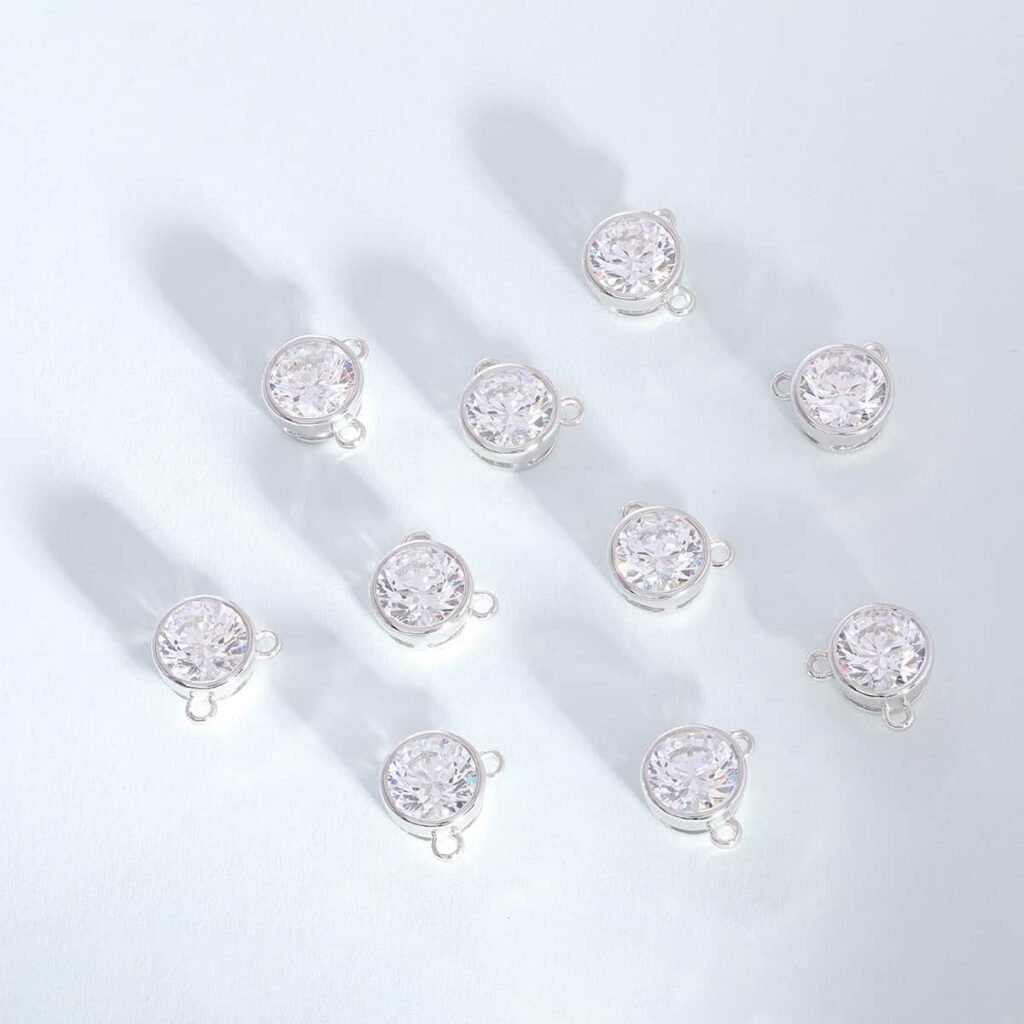
We craft our jewelry using 925 sterling silver and lab-created diamonds—each material carefully selected for its purity, durability, and lasting shine.
S
Sterling Silver
Sterling silver is 92.5% pure silver alloyed with 7.5% copper — that ratio is what the 925 stamp on every piece refers to. Pure silver is too soft to hold a stone securely; the copper is what makes a ring wearable. We finish ours in rhodium, a metal from the platinum family, which gives a bright white surface and slows tarnishing. Rhodium is a plated layer rather than solid metal: on a piece worn daily it thins over a few years and can be re-plated by any jeweller.
D
Lab-created diamonds
A lab-created stone is grown in a chamber rather than dug out of the ground. Growing it takes weeks instead of geological time, and it is the reason a stone this size is affordable at all — you are paying for the material, not for extraction. Because there is no mine, there is no tailings pond and no ambiguity about where it came from.
Caring for it
Silver tarnishes. That is chemistry, not a fault — the copper in the alloy reacts with sulphur in the air, and a piece left in a drawer for a year will come out duller than it went in. The good news is that it reverses easily.
Silver and settings
- Put jewellery on last, after perfume, hairspray and moisturiser.
- Take it off for swimming, showering, cleaning and the gym — chlorine and household bleach attack silver faster than anything else you will meet.
- Wipe with a soft dry cloth after wearing. That alone prevents most tarnish.
- Store dry, ideally in a closed pouch or box. Air and humidity are what dull it.
Stones
- Warm water, a drop of washing-up liquid and a soft toothbrush. Brush behind the stone, not just the top — that is where the film that dulls a stone collects.
- Rinse and dry thoroughly before putting it away.
- Avoid ultrasonic cleaners and steam at home; they are fine in a jeweller’s hands but can loosen a prong if the setting has already been knocked.
What to expect over time
- Tarnish — normal, reversible with a polishing cloth.
- Rhodium wear — a plated finish is a surface. On a daily-wear ring it will thin at the points that rub, usually after a few years, and re-plating is inexpensive.
- Prongs — if you catch a setting hard, have the prongs checked before you wear it again. A bezel setting, like the one on our Solitaire pendant, avoids this entirely.
Everything we make uses the same two materials, so the guidance above applies across the range — from the rings to the pendant necklaces. If something arrives and it is not right, it can be returned unworn within 30 days; the returns policy sets out how.