Lab-Grown vs Natural Diamonds: Which Is Better?
Lab-grown and natural diamonds are the same mineral, cut and graded on the same scale, and equally hard to scratch. The differences that actually matter are origin, price, and what happens if you ever resell the stone. This guide walks through what’s identical, what’s different, and how to decide between them for a ring or a necklace.
What Lab-Grown and Natural Diamonds Have in Common
Lab-grown and natural diamonds are chemically identical: both are pure crystallised carbon arranged in the same cubic lattice structure. That’s why a lab-grown diamond is graded on the same 4Cs as a natural one — cut, colour, clarity and carat — and why a well-cut example of either looks the same to the eye.
Optically, they behave the same way too: light enters, bends and returns as the same fire, sparkle and brilliance regardless of where the carbon came from. A trained cutter working a lab-grown rough faces the same trade-offs between carat retention and light performance as a cutter working a natural rough.
Hardness is identical too. Both score 10 on the Mohs scale, the highest rating any natural material can reach, which is why either type holds up to being worn every day. The stone itself gives no visible sign of which type it is — the difference lies entirely in how it was formed.
One thing that doesn’t change with stone type is the setting. Every GemsGlitz ring and pendant is 925 sterling silver with a rhodium finish, whichever lab-created stone it’s set with — see our materials page for the full specification.
Where They Come From
How Natural Diamonds Form
Natural diamonds form over roughly one to three billion years, deep in the Earth’s mantle, under heat and pressure found only 140 to 190 kilometres below the surface. Volcanic activity eventually carries them close enough to be mined. That timescale and geographic scarcity is a large part of what a natural diamond is priced on.
How Lab-Grown Diamonds Are Made
Lab-grown diamonds are produced by one of two processes. High pressure, high temperature (HPHT) recreates mantle-like conditions in a press; chemical vapour deposition (CVD) builds a diamond crystal layer by layer from carbon-rich gas.
Both methods take weeks, not billions of years, and both produce a stone with the same crystal structure as a natural diamond — a diamond that’s grown rather than mined, not an imitation of one. Our CVD vs HPHT comparison covers the two methods in more technical detail.
Price: Why Lab-Grown Typically Costs Less
The origin story drives the price gap directly. A natural diamond has to be located, extracted and transported before it reaches a cutter; a lab-grown diamond is grown to order in a facility, which removes most of that cost and time.
Because of that, a lab-grown diamond is typically a fraction of the price of a comparable natural stone of the same cut, colour and clarity. That gap moves with the market and shifts with carat size and quality grade, so it’s worth comparing like-for-like rather than assuming a fixed percentage.
What doesn’t move is the underlying logic: production cost, not rarity, sets the lab-grown price. That’s also why GemsGlitz can price lab-created pieces in 925 sterling silver from $99 to $189 — the saving comes from the stone and the production model, not from a smaller or lower-quality setting.
Resale and Long-Term Value
This is the section where honesty matters most. Natural diamonds have an established resale and trade-in market built up over more than a century, and that history supports their value retention — a natural stone can hold a meaningful share of its price if it’s later resold or traded in.
Lab-grown diamonds don’t have that infrastructure yet. Because they can be produced on demand rather than mined from a finite source, resale value for a lab-grown diamond is typically low, and the secondary market for reselling them is still relatively undeveloped.
If you’re buying primarily as a store of value, that trade-off is worth weighing honestly, and a natural stone is the more established choice. If you’re buying to wear — for the look, the size, or what the piece represents — the resale question generally matters less, since you’re getting more stone for the money today.
None of this is a criticism of lab-grown stones; it’s simply a different market with a shorter track record. As lab-grown diamonds become more established, that resale picture may well shift over time, but it’s not something to plan around today.
How to Tell Them Apart
To the naked eye, and even under a jeweller’s loupe, a well-cut lab-grown diamond and a well-cut natural diamond look the same. Neither type has a visible tell in normal use.
Telling them apart reliably takes specialised gemological equipment — tools that detect trace growth patterns and internal characteristics formed during crystallisation, invisible without that equipment. This is why disclosure matters: a stone’s origin is stated by the seller, not read off the stone itself.
In practice, that means the honesty of the seller is doing more work than your own eye ever could. A reputable seller states plainly whether a stone is lab-grown or natural, on the product page, before you buy.
Durability and Everyday Care
Because lab-grown and natural diamonds are the same mineral, they perform identically in daily wear. Both resist scratching thanks to that Mohs-10 hardness, and neither is damaged by ordinary daily activity. Care is the same for both, too:
- Clean with warm water and a little mild dish soap, using a soft brush to reach into the setting.
- Rinse and dry with a lint-free cloth rather than paper towel, which can mark soft metal.
- Avoid chlorine, bleach and other harsh household chemicals — they don’t affect the stone, but they can dull a setting.
- Take rings off for manual work, sports and swimming, and put jewellery on after lotion or perfume, not before.
- Have the setting checked periodically; the stone doesn’t wear, but prongs can loosen over time.
Setting material, not stone type, is the one place care can diverge — and since GemsGlitz pieces are 925 sterling silver, they benefit from the same tarnish-prevention habits as any silver jewellery. Our full lab diamond care guide covers cleaning and storage step by step.
Choosing for an Engagement Ring or Wedding
An engagement ring or wedding band is usually the piece where this decision gets weighed most carefully, and it tends to come down to three things: budget, how long the ring needs to perform, and what tradition means to the couple.
On budget, a lab-grown stone typically allows a larger stone or a higher cut and clarity grade for the same spend — a meaningful factor for a ring worn daily for decades. On durability, there’s no difference at all: both stand up equally to being worn every day.
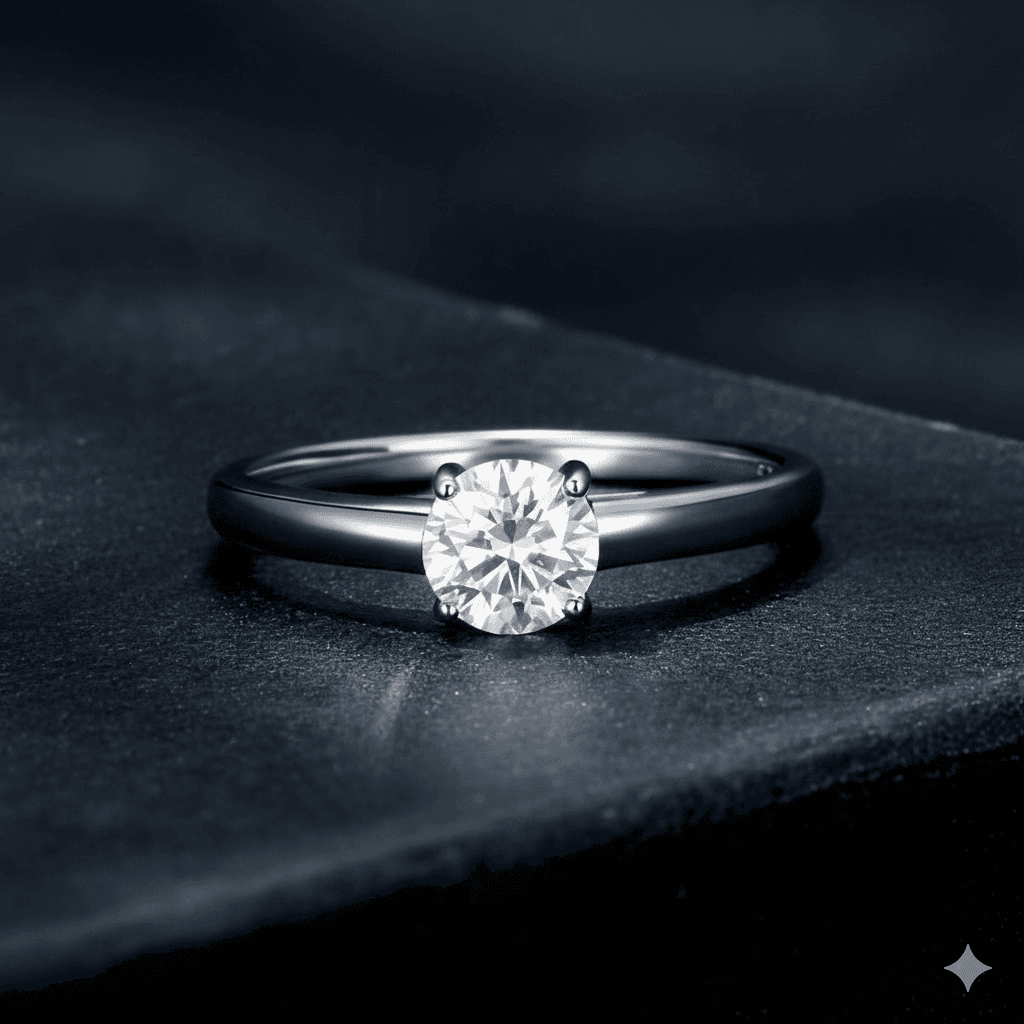
On tradition, some couples place weight on a stone’s rarity and age as part of what the ring symbolises; others would rather put the saving toward the wedding itself or a larger stone. Neither is the “right” answer — it’s a matter of what the ring is meant to represent. GemsGlitz’s ring collection is entirely lab-created stones set in 925 sterling silver, made to order once you choose a style.
Rings vs Necklaces: Same Stone, Different Considerations
The lab-grown-versus-natural decision doesn’t change fundamentally between a ring and a necklace — the chemistry, hardness and grading are identical regardless of setting. A few practical differences are still worth knowing.
A ring takes more daily impact than a pendant does, since it’s exposed to knocks, hand-washing and friction that a necklace mostly avoids sitting against clothing. That makes the durability case for lab-grown — identical hardness to natural — most relevant for rings, where daily wear is heaviest.
Pricing follows carat and setting complexity rather than which piece it is, so the same relative price gap between lab-grown and natural applies to a pendant as it does to a ring. Resale carries the same caveat too — a pendant doesn’t gain or lose value differently just because of its setting. Browse GemsGlitz’s pendant necklaces to see how a lab-created stone looks set in a chain rather than a band.
One practical upside of a pendant: because it isn’t handled and knocked the way a ring is, a slightly larger or more elaborate stone can feel more wearable day to day in a necklace than in a ring of the same carat weight.
How to Decide
There’s no universally correct answer between lab-grown and natural — only which trade-offs suit you.
- Choose lab-grown if size, cut quality and price-per-carat matter most, and resale value isn’t a priority.
- Choose natural if an established resale market and the rarity of the stone are part of what you want the piece to mean.
- Either way, durability and daily care are a non-issue — both perform identically once the piece is on.
- Confirm what the seller discloses about origin, metal and stone size on the product page itself; that’s the only reliable way to know exactly what you’re buying.
For most everyday jewellery — a first ring, a pendant, a piece you’ll actually wear rather than store — lab-grown covers the practical ground at a lower price. For a piece bought explicitly as a long-term asset, natural remains the more established choice.
Frequently Asked Questions
Are lab-grown diamonds real diamonds?
Yes. A lab-grown diamond has the same chemical composition and crystal structure as a natural diamond — it’s carbon, not a simulant like cubic zirconia. The difference is in how the stone formed, not what it’s made of.
Can you tell a lab-grown diamond from a natural one just by looking?
No, not reliably. To the eye and under standard jeweller’s magnification, well-cut examples of each look the same. Telling them apart takes specialised gemological equipment that most buyers, and most jewellers, don’t have on hand.
Do lab-grown diamonds scratch or wear out faster than natural ones?
No. Both score 10 on the Mohs hardness scale and hold up identically to daily wear, and neither needs a different care routine because of its origin.
Will a lab-grown diamond hold its value if I resell it?
Generally, not as well as a natural diamond. Lab-grown resale value is typically low, since the stones can be produced on demand and the resale market for them is still developing — factor that in honestly if long-term value matters to your decision.
Is a lab-grown diamond a good choice for an engagement ring?
For most buyers, yes — it offers the same durability and appearance as a natural stone, typically at a lower price for the same size and quality. The trade-off is resale value, and for some, the sentimental weight of a mined stone’s rarity — which matters more is a personal call, not a quality difference.
What metal does GemsGlitz use for its lab-grown diamond pieces?
All GemsGlitz rings and pendants are set in 925 sterling silver with a rhodium finish; we don’t offer gold or platinum settings. Every stone is lab-created, and each product page states the stone size and setting details.
Whichever direction you lean, the practical case for either stone holds up: both are genuine diamonds, both wear the same way day to day, and both are graded on the same scale. If a lab-created stone in sterling silver fits what you’re after, GemsGlitz’s ring and pendant styles are worth a browse — each product page lists the stone size, cut and setting so you know exactly what you’re choosing.