CVD vs HPHT Lab Diamonds: Technical Comparison
How Lab Diamonds Are Created
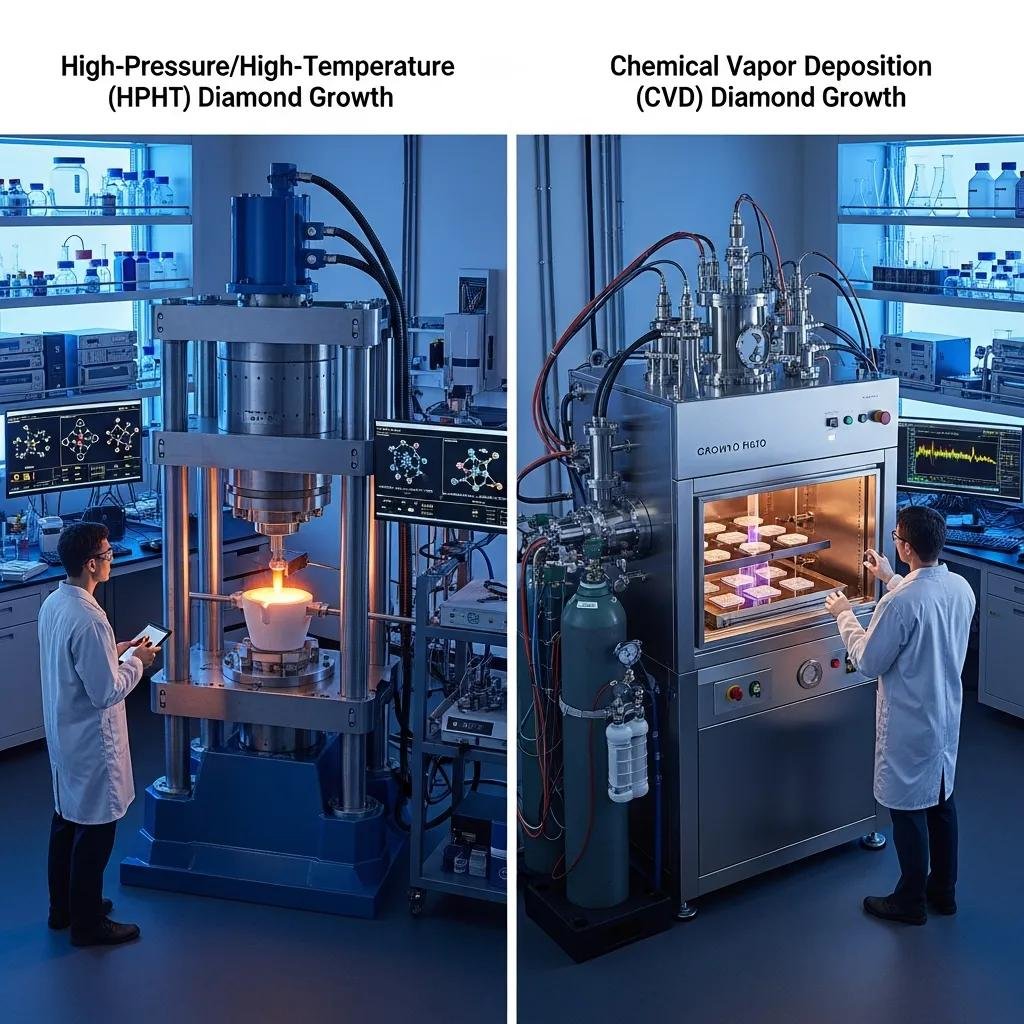
Lab-grown diamonds are produced using two primary methods: Chemical Vapor Deposition (CVD) and High Pressure High Temperature (HPHT). Both produce genuine diamonds with identical physical, chemical, and optical properties to mined diamonds — but they use fundamentally different processes to achieve this result.
HPHT: Recreating Earth’s Conditions
The HPHT method mimics the natural diamond formation process. A small diamond seed is placed in a chamber with pure carbon (graphite) and subjected to extreme conditions: temperatures above 1,400°C and pressure exceeding 5 GPa (about 725,000 psi). Under these conditions, the carbon dissolves and crystallizes around the seed, growing a diamond over several days to weeks.
HPHT Characteristics
- Produces diamonds with cuboctahedral growth patterns
- Typically yields warmer colors (J-M range) unless post-treated
- Can achieve large sizes efficiently (5+ carats)
- May contain metallic flux inclusions (identifiable under magnification)
- Generally more energy-intensive than CVD
CVD: Growing Diamonds from Gas
CVD takes a completely different approach. A thin diamond seed is placed in a sealed chamber filled with carbon-rich gas (typically methane). The gas is heated to 800-1,200°C, creating a plasma that breaks the carbon molecules apart. Carbon atoms then deposit onto the seed layer by layer, growing the diamond vertically. This process takes 2-4 weeks for a 1-carat stone.
CVD Characteristics
- Produces diamonds with layered (tabular) growth patterns
- Naturally achieves higher color grades (D-G range)
- Better suited for producing thin, flat diamond plates
- Fewer inclusions — typically contains only minor graphite spots
- Lower energy consumption per carat than HPHT
Quality Comparison
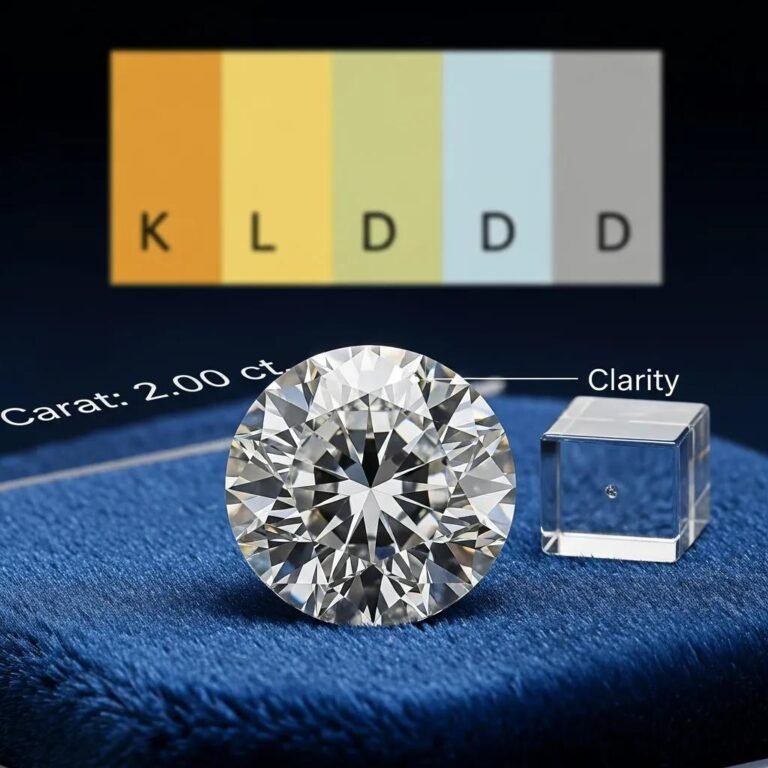
Both methods can produce diamonds that grade identically on the 4Cs (Cut, Clarity, Color, Carat). The growth method does NOT determine quality — cutting, polishing, and individual stone characteristics matter far more. However, there are some practical differences:
Whichever method grew it, the finished stone is what matters: judge any diamond in our range on its cut, colour, clarity and carat rather than on how it was grown.
Color
CVD diamonds tend toward near-colorless to colorless grades naturally. HPHT diamonds often show yellowish or brownish tints and may require post-growth treatment (additional HPHT processing) to improve color. Both can achieve D-color with proper techniques.
Clarity
CVD diamonds may show “strain lines” visible under cross-polarized filters (not visible to the naked eye). HPHT diamonds may contain small metallic inclusions from the flux materials used in growth. Neither affects the diamond’s beauty or durability.
Which Method Is Better?
Neither method is inherently superior. The best lab diamond is the one that scores highest on the 4Cs regardless of growth method. When shopping, focus on the certification grade (GIA, IGI), not the production method. Both CVD and HPHT diamonds are real diamonds — they just took different paths to your jewelry box.
The more useful question is what the laboratory report says about the finished stone — see how GIA and IGI grade lab-grown diamonds.