Diamond Grading Standards: GIA vs IGI Explained
Why Diamond Certification Matters
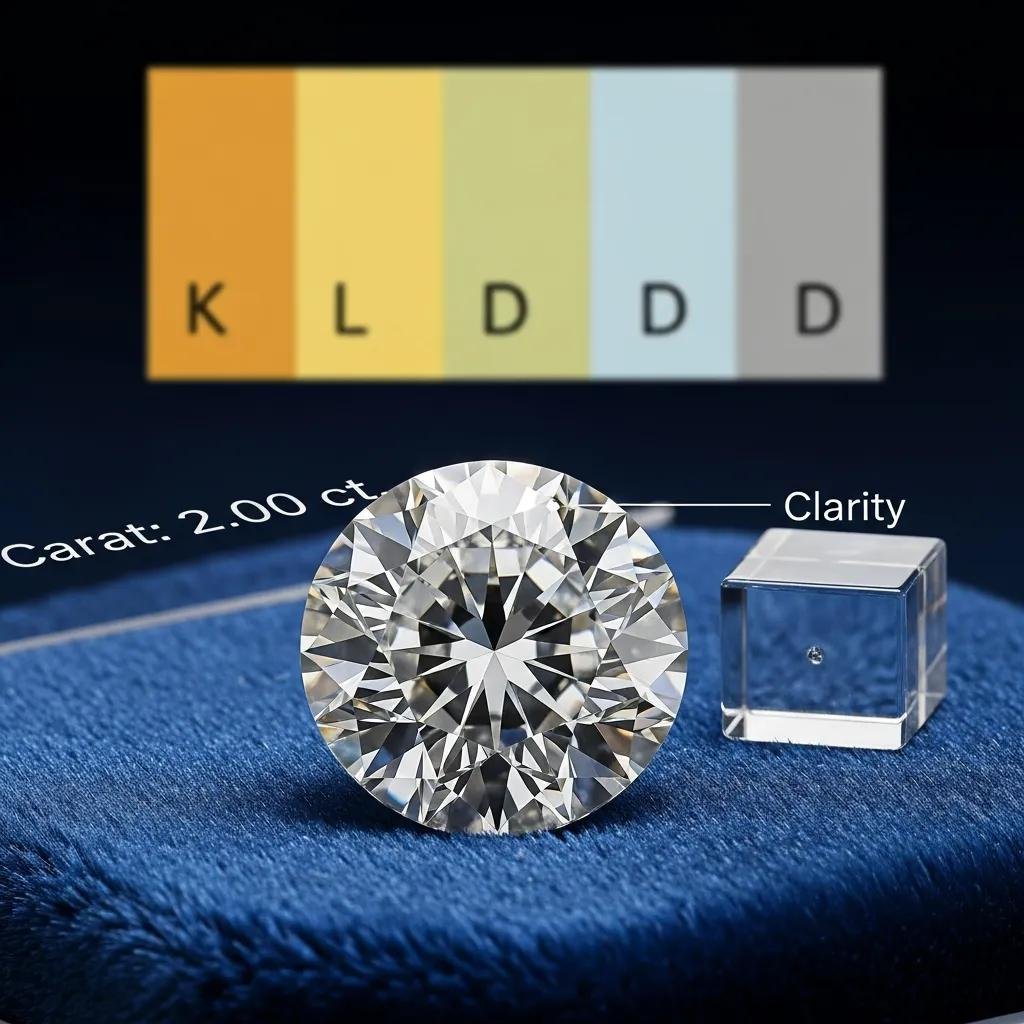
A diamond certificate (or grading report) is your guarantee of quality. It’s an independent, expert assessment of a diamond’s 4Cs — cut, color, clarity, and carat weight. Without certification, you’re relying on the seller’s word. With it, you have objective, standardized proof of what you’re buying.
That is worth keeping in mind when you compare our lab diamond rings and pendant necklaces: ask what any seller can actually document about a stone before you buy.
GIA: The Gold Standard
The Gemological Institute of America (GIA) is the world’s most respected diamond grading laboratory. Founded in 1931, GIA created the 4Cs grading system that the entire industry uses today. Their reports are considered the most consistent and conservative in the industry.
GIA Key Facts
- Created the universal diamond grading standard
- Known for strict, conservative grading (a GIA VS1 may grade VS2 elsewhere)
- Full reports include cut grade, fluorescence, and proportions diagram
- Now grades lab-grown diamonds with identical standards to natural
- Reports marked “Laboratory-Grown Diamond” for lab-created stones
IGI: Leading in Lab-Grown Certification
The International Gemological Institute (IGI) has become the dominant lab for grading lab-grown diamonds. With locations worldwide and faster turnaround times, IGI processes the majority of lab diamond certifications in the market.
IGI Key Facts
- Largest independent gem certification lab globally
- Faster turnaround than GIA (days vs weeks)
- Comprehensive reports including hearts and arrows analysis
- Generally considered slightly more lenient than GIA (1 grade difference on average)
- Preferred by most lab-grown diamond retailers
GIA vs IGI: Key Differences
The most important difference is grading consistency. GIA tends to grade more conservatively — meaning a diamond graded G color by GIA might receive an F color grade from IGI. This doesn’t mean one is wrong; it reflects different calibration standards. The practical impact: an IGI-graded diamond may appear to offer better specs for the price, but comparing across labs requires adjustment.
What to Look For in a Report
- Report number — verify online at the lab’s website
- Cut grade — prioritize Excellent/Ideal over everything else
- Proportions — table percentage (54-57%), depth (61-62.5%) for round brilliants
- Fluorescence — None to Faint is preferred for D-F colors
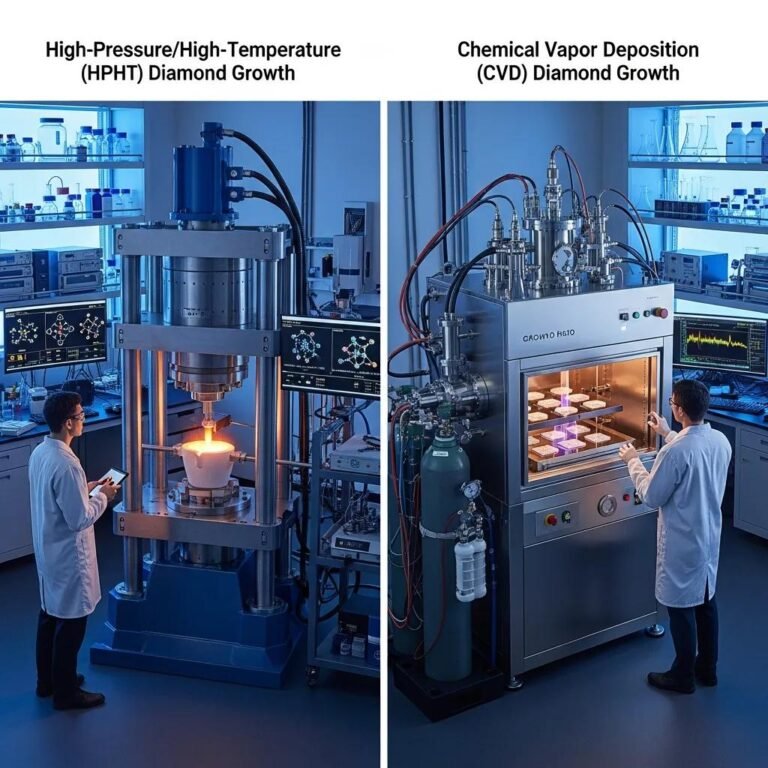
- Growth method — CVD or HPHT (for lab-grown reports)
Our Recommendation
For lab-grown diamonds, both GIA and IGI provide reliable certifications. If comparing prices between labs, assume IGI grades run approximately one grade more generous on color and clarity. When in doubt, choose a GIA-certified stone for maximum confidence, or an IGI-certified stone for better value at equivalent visual quality.
If you want the background on how the stone itself was grown, CVD and HPHT are compared here.