Understanding the Price Differences: Lab Grown Diamonds vs Natural Diamonds
Understanding the Price Differences: Lab Grown Diamonds vs Natural Diamonds – A Comprehensive Price Comparison and Value Guide
About the Author
Dr. Emily Carter is a certified gemologist with over 15 years of experience specializing in diamond grading, pricing analysis, and market trends. Holding a Graduate Gemologist diploma from the Gemological Institute of America (GIA) and a PhD in Materials Science focusing on diamond synthesis, Dr. Carter has advised leading jewelry retailers and investment firms on diamond valuation and ethical sourcing. Her expertise bridges the scientific and commercial aspects of both lab-grown and natural diamonds, providing consumers with clear, data-driven insights to make informed purchasing decisions.
The jewelry market has seen a significant shift with the introduction of lab-grown diamonds, which offer a compelling alternative to traditional natural diamonds. Understanding the price differences between these two types of diamonds is crucial for consumers looking to make informed purchasing decisions. This article will explore the origins, characteristics, and pricing factors of both lab-grown and natural diamonds, providing a comprehensive guide to their value. Many buyers are often confused about the cost implications and the ethical considerations surrounding these diamonds. By delving into the specifics of how each type is priced, we aim to clarify these complexities. We will cover the origins of both diamond types, the impact of the 4Cs on pricing, a detailed price comparison, resale values, ethical factors, and guidance for buyers.
What Are Lab Grown and Natural Diamonds? Origins and Key Characteristics
Lab-grown diamonds are created using advanced technological processes that replicate the natural conditions under which diamonds form in the earth. These diamonds are chemically, physically, and optically identical to natural diamonds, making them a popular choice for consumers seeking ethical and affordable options. The two primary methods for creating lab-grown diamonds are Chemical Vapor Deposition (CVD) and High-Pressure High-Temperature (HPHT) techniques. Both methods produce high-quality diamonds that are certified by reputable organizations such as the Gemological Institute of America (GIA) and the International Gemological Institute (IGI).
Natural diamonds, on the other hand, are formed over millions to billions of years deep within the Earth’s mantle under extreme heat and pressure. Their unique attributes include rarity, historical significance, and the natural beauty that comes from their geological formation. Natural diamonds are often valued for their unique inclusions and characteristics that tell a story of their formation. Understanding these origins helps consumers appreciate the distinct qualities of each diamond type.
How Are Lab Grown Diamonds Created and Certified?
Lab-grown diamonds are produced through two main processes: CVD and HPHT. The scientific process of creating lab diamonds involves CVD, which uses a gas mixture to deposit carbon atoms onto a substrate, gradually forming a diamond crystal. HPHT mimics the natural conditions of diamond formation by applying high pressure and temperature to carbon sources. Both methods yield diamonds that are graded and certified by organizations like GIA and IGI, ensuring their quality and authenticity.
What Defines Natural Diamonds and Their Unique Attributes?
Natural diamonds are formed through geological processes over millions to billions of years, resulting in unique characteristics that cannot be replicated. Their rarity and historical significance contribute to their allure, as each diamond carries a story of its formation. Natural diamonds often exhibit unique inclusions and color variations, making each stone one-of-a-kind. This uniqueness is a significant factor in their pricing and desirability among consumers.
How Do the 4Cs Impact Diamond Pricing for Lab Grown and Natural Diamonds?
The 4Cs—Cut, Color, Clarity, and Carat—are essential factors that influence the pricing of both lab-grown and natural diamonds. Each of these characteristics plays a crucial role in determining a diamond’s overall value and appeal to consumers.
What Role Do Cut, Color, Clarity, and Carat Play in Diamond Cost?
- Cut: The quality of a diamond’s cut affects its brilliance and sparkle. A well-cut diamond reflects light beautifully, enhancing its visual appeal and value.
- Color: Diamonds are graded on a scale from D (colorless) to Z (light yellow or brown). The less color a diamond has, the more valuable it is perceived to be.
- Clarity: This refers to the presence of inclusions or blemishes in a diamond. Higher clarity grades indicate fewer imperfections, which can significantly increase a diamond’s value.
- Carat: The weight of a diamond is measured in carats. Larger diamonds are rarer and typically more expensive, but the price per carat can vary based on the other Cs.
Understanding how these factors interplay helps consumers make informed decisions when comparing lab-grown and natural diamonds.
How Do Certification Standards Affect Diamond Value?
Certification standards play a vital role in determining a diamond’s value. Reputable organizations like GIA and IGI provide grading reports that assess the 4Cs, ensuring transparency and trust in the diamond market. A certified diamond typically commands a higher price due to the assurance of quality and authenticity. Consumers should always seek certified diamonds to ensure they are making a sound investment.
What Is the Detailed Price Comparison Between Lab Grown and Natural Diamonds?
When comparing prices, lab-grown diamonds generally cost significantly less than their natural counterparts. This price difference is primarily due to the lower production costs and the ability to create lab-grown diamonds on demand.
How Much Cheaper Are Lab Grown Diamonds by Carat and Quality?
Lab-grown diamonds can be approximately 30-50% cheaper than natural diamonds, depending on the carat weight and quality. For example, a 1-carat lab-grown diamond may cost around $1,500 to $3,000, while a similar natural diamond could range from $4,000 to $8,000. This substantial price difference makes lab-grown diamonds an attractive option for budget-conscious consumers.
| Diamond Type | Average Price per Carat | Quality Level |
|---|---|---|
| Lab-Grown | $1,500 – $3,000 | High |
| Natural | $4,000 – $8,000 | High |
This table illustrates the significant cost savings associated with lab-grown diamonds, making them a viable option for many buyers. Industry research further highlights the significant cost advantages and ethical benefits of lab-grown diamonds.
Lab-Grown Diamonds: Ethical Alternative & Cost Reduction
conventional diamond mining is rife with environmental and ethical concerns. Lab-grown diamonds present a sustainable alternative to deep-seated diamond mining by simulating natural conditions to produce the precious stones above ground in a span of six weeks. This allows for up to a 30% reduction in the cost of diamond production compared to conventional mining methods.
Sustainable Sparkle: The Emergence and Impact of Lab-Grown Diamonds in India’s
Diamond Capital, AS George, 2024
Why Do Lab Grown Diamonds Cost Less Than Natural Diamonds?
The lower cost of lab-grown diamonds can be attributed to several factors, including the efficiency of production methods and the absence of mining costs. Lab-grown diamonds can be produced in a controlled environment, allowing for consistent quality and lower prices. Additionally, the growing market demand for ethical and sustainable options has led to increased competition among producers, further driving down prices.
Further analysis delves into the specific capital expenditures involved in producing lab-grown diamonds compared to traditional mining.
Lab-Grown vs. Mined Diamonds: Capital Expenditure Comparison
Lab-grown diamonds produced using HPHT and MP CVD methods are compared to mined diamonds in terms of capital expenditure per annualized carat. In our analysis, we will separate MP CVD from others CVD methods.
Comparative analysis: CapEx in diamond mining versus diamond growing, based on open data sources and experimental results, V Zhdanov, 2024
How Do Resale Value and Investment Potential Differ Between Lab Grown and Natural Diamonds?
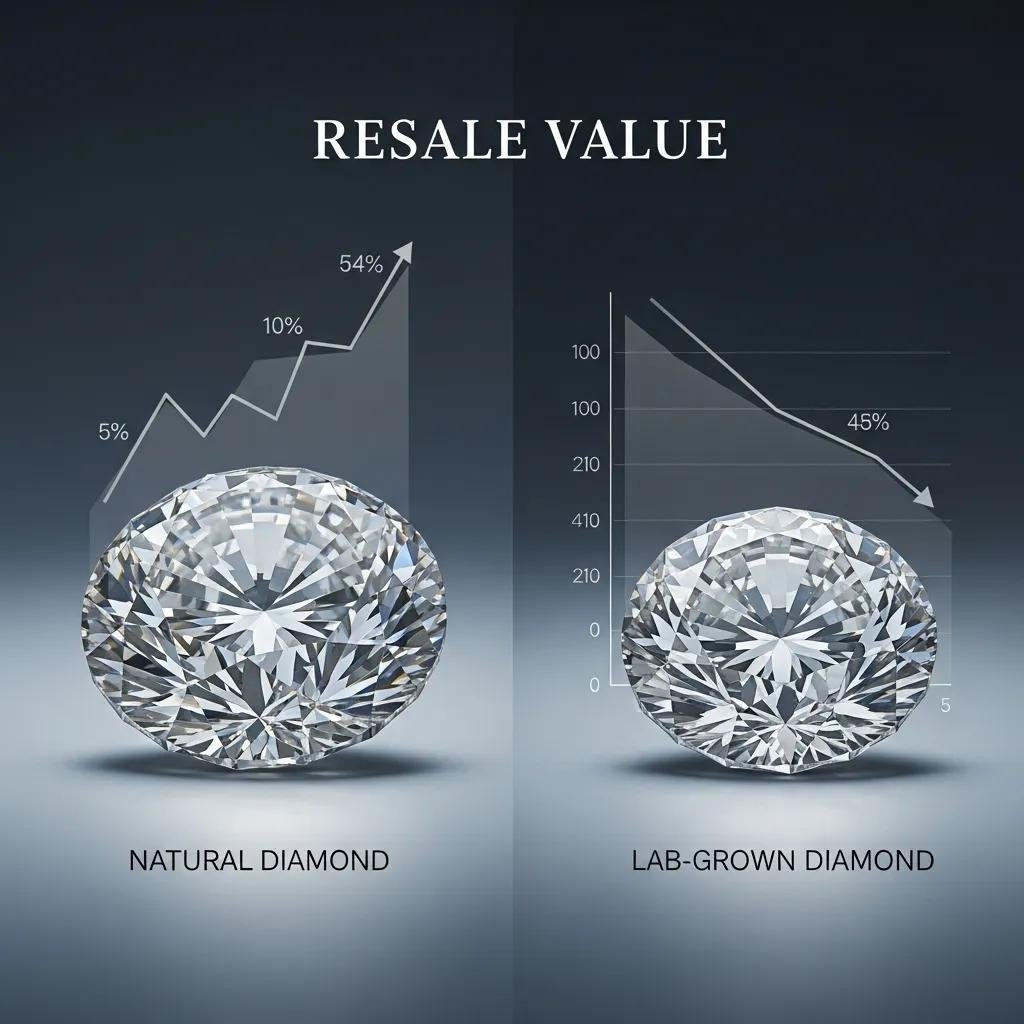
The resale value of diamonds is an important consideration for buyers, especially those looking at diamonds as an investment. Natural diamonds have historically held their value better than lab-grown diamonds, which can depreciate more quickly due to their availability and production methods.
Do Lab Grown Diamonds Hold Their Value Over Time?
Lab-grown diamonds typically do not retain their value as well as natural diamonds. While they may be a more affordable option initially, their resale value can be significantly lower. This is an important factor for consumers to consider when making a purchase, especially if they view the diamond as a long-term investment.
Are Natural Diamonds a Better Investment Than Lab Grown?
Natural diamonds are often considered a better investment due to their historical value retention and rarity. As natural diamonds become scarcer, their prices may increase over time, making them a more stable investment choice. In contrast, lab-grown diamonds may not appreciate in value as they are produced in larger quantities and are more readily available.
What Ethical and Environmental Factors Influence Diamond Pricing and Consumer Choice?
Ethical sourcing and environmental impact are increasingly important factors for consumers when choosing between lab-grown and natural diamonds. Many buyers are now prioritizing sustainability and ethical considerations in their purchasing decisions.
How Does Ethical Sourcing Affect Natural and Lab Grown Diamond Prices?
Ethical sourcing practices can influence the pricing of natural diamonds, as consumers are willing to pay a premium for diamonds that are certified conflict-free. Lab-grown diamonds, being produced in controlled environments, often appeal to consumers seeking ethical alternatives, which can also affect their pricing dynamics.
What Is GemsGlitz.com’s Commitment to Sustainable and Transparent Jewelry?
GemsGlitz.com positions itself as a provider of ethically sourced, high-quality jewelry, with a significant focus on lab-grown diamonds. The company aims to offer useful information and guide customers toward purchasing elegant jewelry for special occasions and daily wear. By prioritizing sustainability and transparency, GemsGlitz.com ensures that customers can make informed choices that align with their values.
How Can Buyers Make an Informed Decision When Choosing Between Lab Grown and Natural Diamonds?
Making an informed decision when purchasing a diamond, especially for significant occasions like engagement rings, involves understanding the pros and cons of each type, as well as considering personal preferences and values.
What Are the Pros and Cons of Lab Grown Diamonds?
Lab-grown diamonds offer several advantages, including lower prices, ethical sourcing, and identical physical properties to natural diamonds. However, they may lack the historical significance and potential for value appreciation that natural diamonds possess. Buyers should weigh these factors carefully when making their choice.
What Should You Consider When Selecting the Right Diamond for Your Needs?
When selecting a diamond, consider factors such as budget, occasion, and personal values. It’s essential to ask questions about the diamond’s origin, certification, and any ethical considerations. By doing so, buyers can ensure they choose a diamond that meets their needs and aligns with their values.
2026 Market Trends and Expert Predictions
As of early 2026, the diamond market continues to evolve with notable shifts in pricing and consumer preferences. Lab-grown diamonds have seen a steady price decline of approximately 5-7% annually over the past two years due to advancements in production technology and increased market competition. Current average prices for 1-carat high-quality lab-grown diamonds range between $1,200 and $2,800, reflecting improved affordability.
Natural diamonds, while maintaining their premium status, have experienced moderate price increases of 3-5% annually, driven by supply constraints and growing demand for ethically sourced stones. Experts forecast that this trend will continue, with natural diamond prices expected to rise by 10-15% over the next five years, reinforcing their position as a long-term investment.
Industry analysts emphasize the growing consumer emphasis on sustainability and transparency, which is accelerating the adoption of lab-grown diamonds in mainstream markets. However, natural diamonds retain strong appeal for collectors and investors due to their rarity and historical value.
Leading market voices, including the Rapaport Group and Bain & Company, predict a gradual narrowing of the price gap between lab-grown and natural diamonds, but not a convergence, preserving distinct market segments for each. Buyers are encouraged to consider both current pricing data and future forecasts when making purchasing decisions.
Quick Decision Guide for Budget-Conscious Buyers
Choosing the right diamond within your budget can be simplified by considering specific price points and what you can expect at each level.
- Under $2,000: Lab-grown diamonds are the best option here, offering high-quality stones around 0.5 to 1 carat with excellent cut and clarity. Natural diamonds at this price tend to be smaller or have lower clarity grades.
- $2,000 to $5,000: This range allows for 1-carat lab-grown diamonds with premium characteristics or smaller natural diamonds with good quality. Buyers prioritizing size and ethical sourcing often prefer lab-grown diamonds in this bracket.
- $5,000 to $10,000: Buyers can access high-quality natural diamonds around 1 carat or larger lab-grown diamonds with exceptional grading. This budget supports investment-grade natural stones or statement lab-grown pieces.
By aligning your budget with these scenarios, you can make a confident choice that balances size, quality, and ethical considerations.
Frequently Asked Questions
Do lab-grown diamonds hold their value?
Lab-grown diamonds typically do not retain their value as well as natural diamonds. While they may be a more affordable option initially, their resale value can be significantly lower. This is an important factor for consumers to consider when making a purchase, especially if they view the diamond as a long-term investment.
Are natural diamonds a better investment than lab-grown diamonds?
Natural diamonds are often considered a better investment due to their historical value retention and rarity. As natural diamonds become scarcer, their prices may increase over time, making them a more stable investment choice. In contrast, lab-grown diamonds may not appreciate in value as they are produced in larger quantities and are more readily available.
How does ethical sourcing affect natural and lab-grown diamond prices?
Ethical sourcing practices can influence the pricing of natural diamonds, as consumers are willing to pay a premium for diamonds that are certified conflict-free. Lab-grown diamonds, being produced in controlled environments, often appeal to consumers seeking ethical alternatives, which can also affect their pricing dynamics.
What is GemsGlitz.com’s commitment to sustainable and transparent jewelry?
GemsGlitz.com positions itself as a provider of ethically sourced, high-quality jewelry, with a significant focus on lab-grown diamonds. The company aims to offer useful information and guide customers toward purchasing elegant jewelry for special occasions and daily wear. By prioritizing sustainability and transparency, GemsGlitz.com ensures that customers can make informed choices that align with their values.
What are the pros and cons of lab-grown diamonds?
Lab-grown diamonds offer several advantages, including lower prices, ethical sourcing, and identical physical properties to natural diamonds. However, they may lack the historical significance and potential for value appreciation that natural diamonds possess. Buyers should weigh these factors carefully when making their choice.
What should you consider when selecting the right diamond for your needs?
When selecting a diamond, consider factors such as budget, occasion, and personal values. It’s essential to ask questions about the diamond’s origin, certification, and any ethical considerations. By doing so, buyers can ensure they choose a diamond that meets their needs and aligns with their values.
What is the exact price difference between 1-carat diamonds?
The exact price difference between 1-carat lab-grown and natural diamonds varies based on quality and market conditions, but generally, lab-grown diamonds cost approximately 30-50% less. For instance, a 1-carat lab-grown diamond may range from $1,200 to $3,000, while a comparable natural diamond typically ranges from $4,000 to $8,000. This significant gap reflects differences in production costs, rarity, and market demand.
Which offers better value for engagement rings?
Lab-grown diamonds often offer better value for engagement rings due to their lower price and identical physical and optical properties compared to natural diamonds. They allow buyers to select larger or higher-quality stones within the same budget. However, natural diamonds may hold more sentimental and investment value for some buyers. Ultimately, the better value depends on personal priorities such as budget, ethical considerations, and long-term value retention.